
Arrest History in Nevada
A Nevada arrest can create several records at once. The arresting sheriff, municipal police department, Nevada State Police unit, campus police force, or other agency writes an incident or arrest report. A receiving jail may assign a booking number, record listed charges and holds, take fingerprints, and capture a booking photograph. If a prosecutor files charges, a court opens a separate case.
Fingerprints from a booked arrest may reach the Central Repository for Nevada Records of Criminal History. The Repository matches them to a fingerprint-supported identity and later receives disposition reports. Its Nevada history generally covers reported arrest and outcome data from 1987 forward. It is Nevada-only and does not contain the full police narrative. Older material belongs with the original arresting agency. A local booking row, a court docket, and a Repository arrest cycle therefore describe related but distinct records.
Note: No single public Nevada arrest search combines every police report, booking, court outcome, and fingerprint-linked Repository record.
Four Nevada Arrest Records
Knowing which Nevada record answers which question saves time. The Nevada police report describes the incident and officer action. The Nevada booking record shows intake and custody facts. The Nevada court file shows filed charges and the legal outcome. The Repository history links reportable Nevada arrest cycles and dispositions to fingerprints. None is a full substitute for the others.
- Incident or arrest report
- Agency narrative, event number, arrest facts, and releasable supporting detail.
- Booking record
- Jail intake, booking number, listed charges, holds, bail, release, and custody status.
- Court case
- Filed complaint or charging instrument, docket events, orders, disposition, and sentence.
- Repository arrest cycle
- Fingerprint-linked Nevada arrest data plus later reported prosecutor and court outcomes.
Use the Nevada source closest to the event. For a new Nevada custody question, check the correct jail. For a final Nevada outcome, read the court judgment. For your own multi-county Nevada history, use the Repository's fingerprint process. A no-hit in one Nevada system does not erase a record held in another.
How Arrests Become Part of a Nevada Record
The Nevada record chain begins when an officer makes a Nevada arrest or issues a reportable citation. If the person is booked, the Nevada jail records identity and intake data and takes fingerprints. Those prints are mailed or sent by live scan to the Nevada Central Repository. Fingerprint comparison lets the Nevada Repository associate the event with the correct identity rather than rely only on a name.
Data flow: Arrest › Booking › Fingerprint Submission › Nevada Central Repository Entry
The Nevada prosecutor may decline, amend, or file charges. Nevada Justice or Municipal Court handles limited-jurisdiction work, while felony and gross-misdemeanor matters can move to Nevada District Court. Nevada generally requires agencies to report final dispositions within 60 days. A late or missing Nevada report can leave an arrest cycle without its closing outcome. Citation releases without prints and older Nevada records can also fall outside the modern fingerprint-linked view. Compare the Repository copy with the local signed disposition when accuracy matters.
Nevada Arrest Custody Systems
Recent Nevada booking and state imprisonment are different stages. Nevada has no one public statewide county-jail roster. Nevada local jails hold people before trial, some people serving local sentences, and people waiting for transfer. The Nevada Department of Corrections, or NDOC, holds people committed to Nevada state prison custody. Its inmate locator is not a recent-arrest search and NDOC directs new Nevada arrest inquiries back to the city or county of arrest.
| System | Best use | Main limit |
|---|---|---|
| County or city jail | Recent booking, current custody, listed charges, and release status | Local coverage; records may change after release or transfer |
| NDOC Inmate Search | State-prison identity, location, sentence, and release data | Not a county-jail roster or official certified record |
| VINE | Participating jail and state-prison custody notifications | Notification aid, not proof of legal status |
The official NDOC Inmate Search accepts an offender ID or first and last name, with a percent sign available as a wildcard.
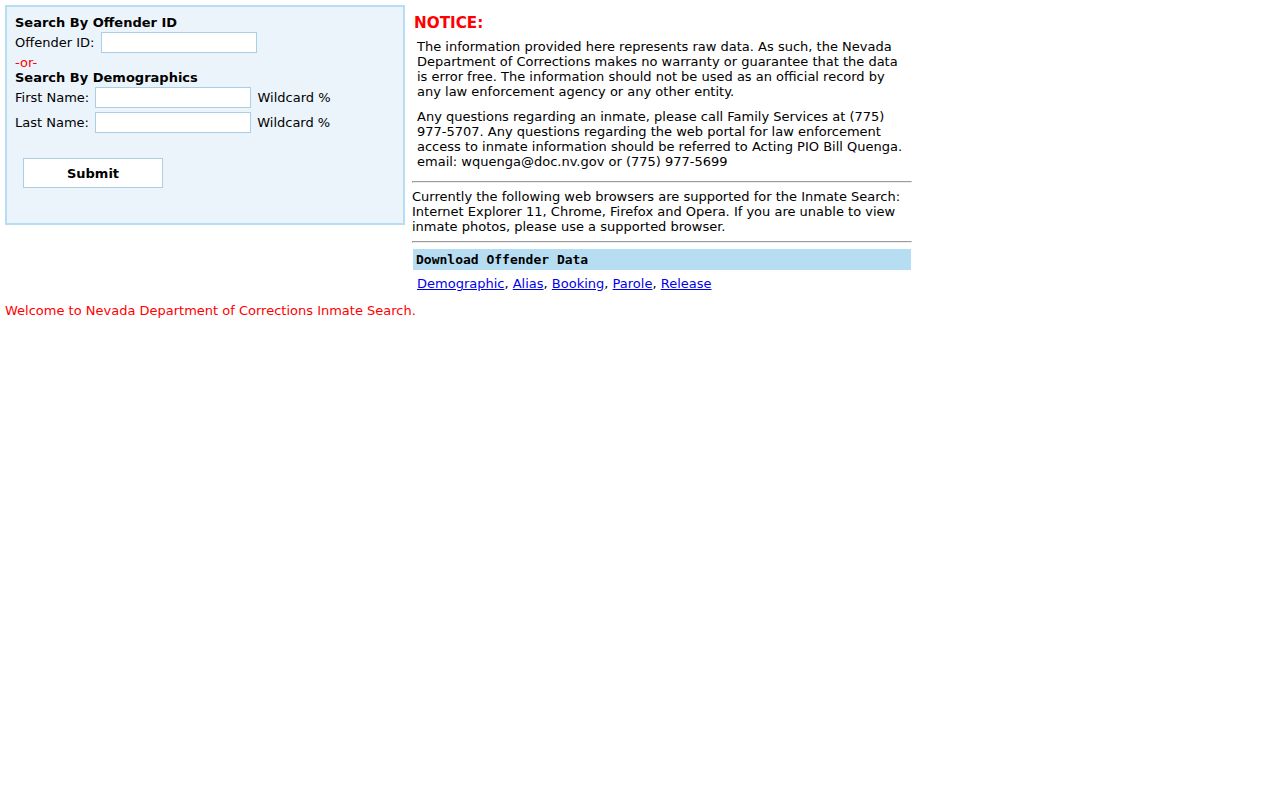
Its profiles and data downloads concern Nevada corrections custody, aliases, bookings, parole, and release, not every local arrest.
How to Look Up Nevada Arrests
Nevada arrest lookup is a two-track task. Use local Nevada records for a recent booking or police report. Use the subject-only Nevada Repository process for your own fingerprint-linked statewide history. There is no unrestricted public Nevada Repository name search for another person.
- Identify the Nevada city or county of arrest and the arresting agency. That choice controls the report custodian and likely jail.
- Search the appropriate Nevada current-custody roster. If there is no result, check separate city facilities and ask about release, transfer, or update lag.
- Use the directory of all 17 Nevada county equivalents to reach local arrest, jail, and court routes.
- Search the likely Nevada Justice or Municipal Court, then District Court if the case moved there, and read the latest disposition.
- Request the arrest report from the agency. For your own statewide Nevada history, order the Repository's fingerprint-supported personal record.
A representative county in-custody form shows the narrow local pattern.
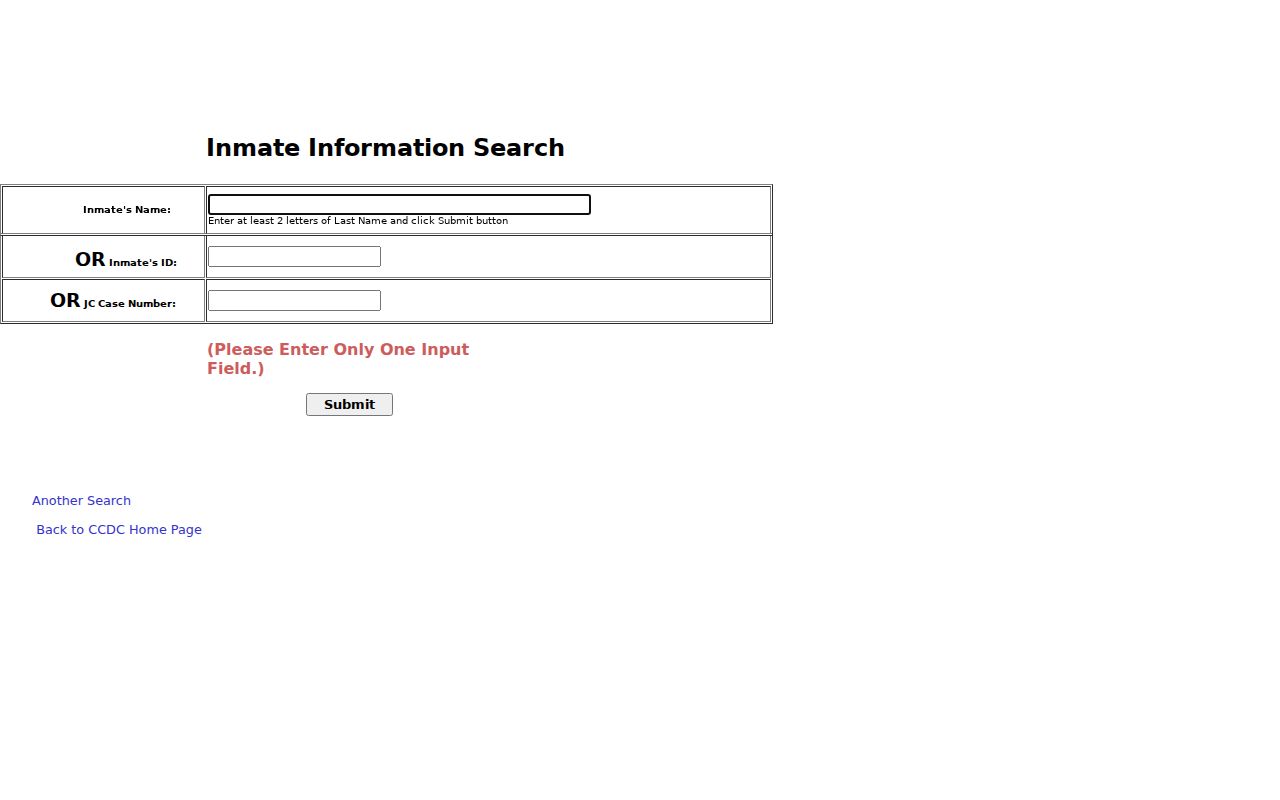
That form accepts a last name, inmate ID, or Justice Court case number, but it covers only current custody in that detention system.
Nevada Arrest Custody Alerts
Nevada VINE bridges participating county jails and the state prison system. It provides free, anonymous, confidential custody and status information and can send notice of release, transfer, or other custody changes. The service runs around the clock through VINELink and the Nevada phone channel. It is useful when a person wants updates without repeatedly checking separate rosters.
The official VINELink interface is the enrollment and search channel assigned to this Nevada arrest page.
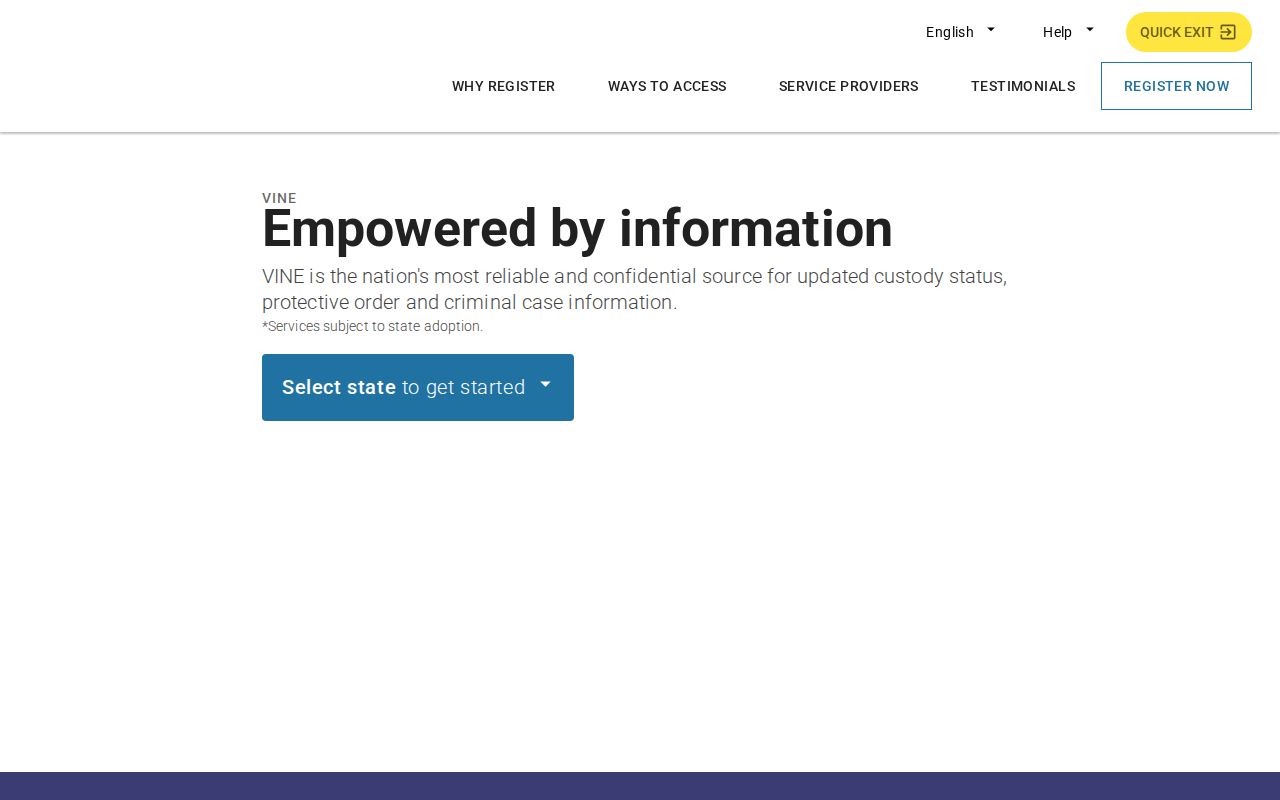
VINE should not be treated as a court judgment, certified custody record, or personal-safety plan. Verify a legal status with the jail, NDOC, or the court that holds the case.
Note: Register for Nevada custody alerts directly, and keep the selected phone or email contact information current.
What a Nevada Arrest Record Shows
A Nevada arrest or booking record may identify the event, agency, intake, listed allegations, and custody status. Fields vary by custodian. Public versions can omit victim and witness information, juvenile material, medical details, personal identifiers, active-investigation content, security data, and sealed information. A booking photograph may appear if the agency lawfully releases it, but Nevada has no simple rule that every mugshot must be online.
| Arrestee Name & Identifiers | Name, aliases, date of birth, descriptors, and available fingerprint or state identifiers. |
|---|---|
| Arrest Date & Location | When and where the arrest or intake occurred. |
| Arresting Agency | The sheriff, police, state, campus, or other agency that created the report. |
| Charges at Booking | Allegations and cited statutes as listed at intake, subject to later change. |
| Booking Number & Photograph | A local intake identifier and an image only when lawful agency access permits. |
| Bond / Release Status | Listed bail, holds, custody, release method, or release date, which may change. |
The booking row does not prove guilt or state the final sentence. The court file is the source for the filed charge and outcome. The incident narrative remains with the arresting agency, not the Repository. Never use the absence of a booking photo as proof that no Nevada arrest occurred.
Nevada Arrest Statistics Are Aggregate
The Nevada State Police Uniform Crime Reporting program receives agency submissions. It publishes annual Crime in Nevada reports and the Nevada Crime Statistics, or TOPS, dashboard. TOPS lets users select a report theme, jurisdiction or agency, and year, then sort or export available aggregate data. It does not return names or personal arrest histories.
The official Nevada crime statistics dashboard displays the statewide reporting controls.
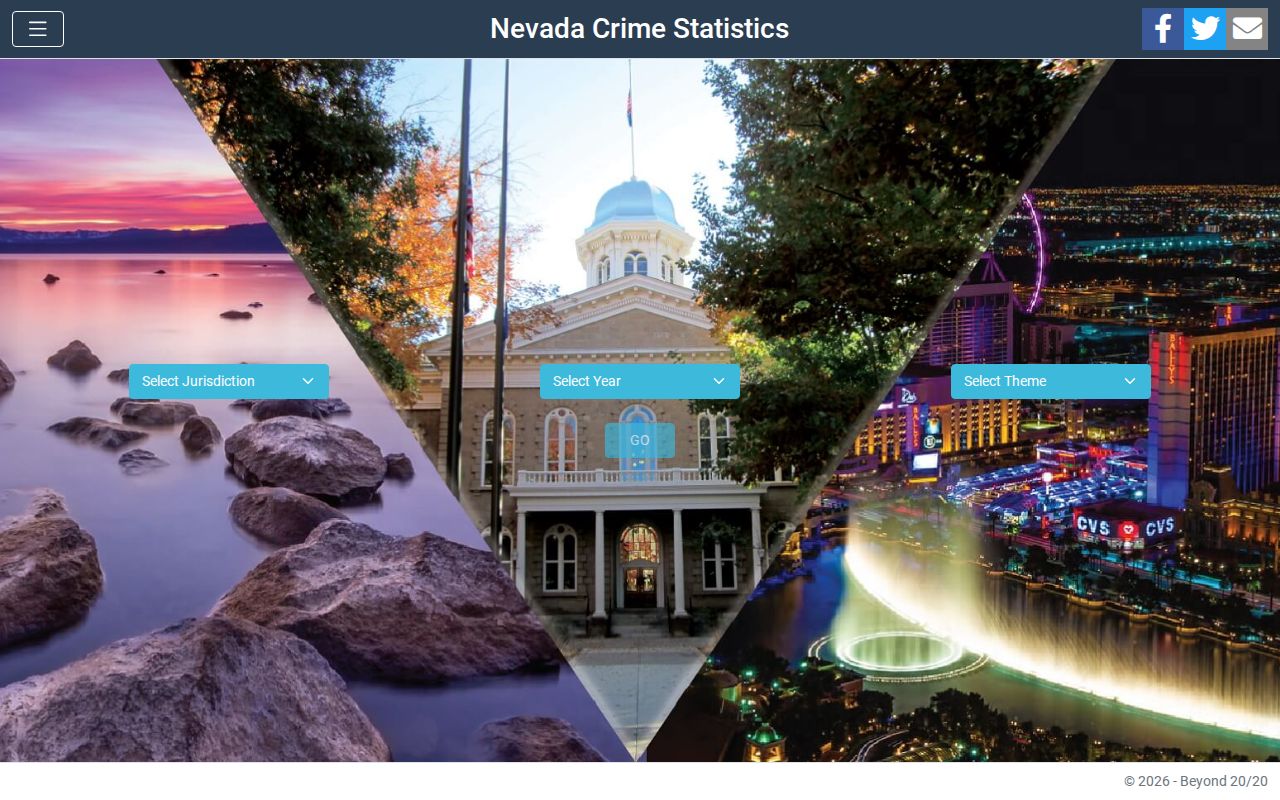
The dashboard helps measure reported activity, but agency participation, late submissions, classification changes, and the chosen theme affect comparisons.
The official Crime in Nevada annual-report list supplies the longer statewide series.
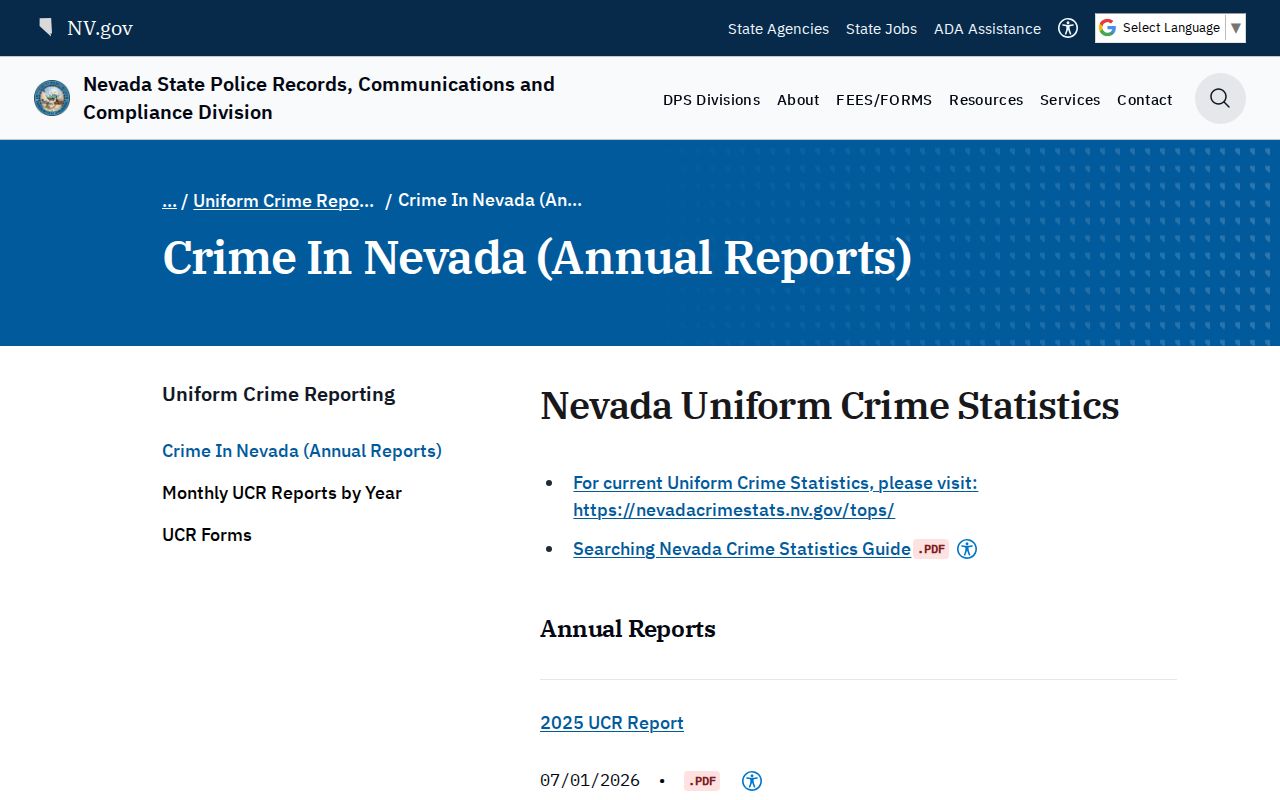
In the 2024 reports inspected for the Nevada research, TOPS showed 6,168 violent-crime arrests and 10,955 property-crime arrestees. Those totals follow UCR and NIBRS rules. They are not conviction counts and may not represent unique people across every table.
Arrests vs Convictions
A Nevada arrest records an accusation and custody event. A conviction is a court judgment after an accepted plea or guilty verdict. Charges can be declined, dismissed, amended, reduced, diverted, or tried to acquittal. The distinction matters because the arresting agency, jail, court, and Repository can show different points in that sequence.
| Arrest Record | Conviction Record | |
|---|---|---|
| Created by | Arresting agency and receiving jail | Court judgment, later reported to the Repository |
| What it proves | An arrest, citation, or booking was recorded | Guilt was established by plea or verdict and judgment |
| Best outcome source | Does not establish the outcome | Signed court judgment and sentence |
| Ordinary access | Local roster, agency request, or subject's Repository review | Court file and qualifying Repository dissemination |
| Record sealing | May qualify based on outcome and Nevada law | Eligibility and waiting period depend on the offense and statute |
Note: An arrest entry without a disposition is not proof of guilt; check the Nevada court's signed closing order.
Missing Nevada Arrest History
A no-hit can have several Nevada-specific causes. The person may have been released or transferred out of the local roster. A city jail may be separate from the county facility. Protective-custody and juvenile information can be withheld. The name may be recorded under an alias. A fingerprint or final disposition may not yet have reached the Repository. A pre-1987 event may remain only with the original agency.
For an underlying Nevada State Police report, the DPS public-record channel accepts online, mail, and fax requests and asks for contact details, a clear record description, format, and delivery choice. Local agencies use their own channels. Actual reproduction cost and an extraordinary-use fee may apply. If an arrest cycle on your Nevada Repository record is wrong or lacks a disposition, the subject can use the formal challenge process with fingerprints and supporting court or agency proof.
For a pre-1987 Nevada arrest, begin with the original law-enforcement agency because the modern Repository coverage is generally described as 1987 forward. Ask for the report by event, booking, or case number when known. Then locate the court that handled any charge and request its final order. Those two local sources can fill a gap that a current fingerprint-supported Repository copy cannot. If the record was sealed, ordinary public channels should not be expected to return it. A lawful sealing order restricts access but does not mean each official copy was physically destroyed.